Need or Desire?
- Reanna Costa

- Feb 25
- 2 min read
A Nervous System Perspective on Boundaries, Disappointment, and Vulnerability
We often talk about “needs” and “desires” as if they’re clean categories.
But in somatic work, the distinction isn’t conceptual — it’s regulatory.
I tend to differentiate needs and desires less by definition and more by nervous system impact.

What Makes Something a Need?
A need is something that, if chronically unmet, destabilizes the system.
When a true need isn’t protected, you’ll often see:
Contraction
Resentment
Depletion
Collapse
Erosion of integrity over time
Needs are protective. Boundaries around them create safety and stability in the nervous system.
What Makes Something a Desire?
Desires are often expressions of:
Vitality
Preference
Expansion
Pleasure
When a desire isn’t met, there may be disappointment — but ideally not dysregulation.
You remain intact.
But here’s where it gets complex.
It’s rarely that clean.
When Desire Feels Like Survival
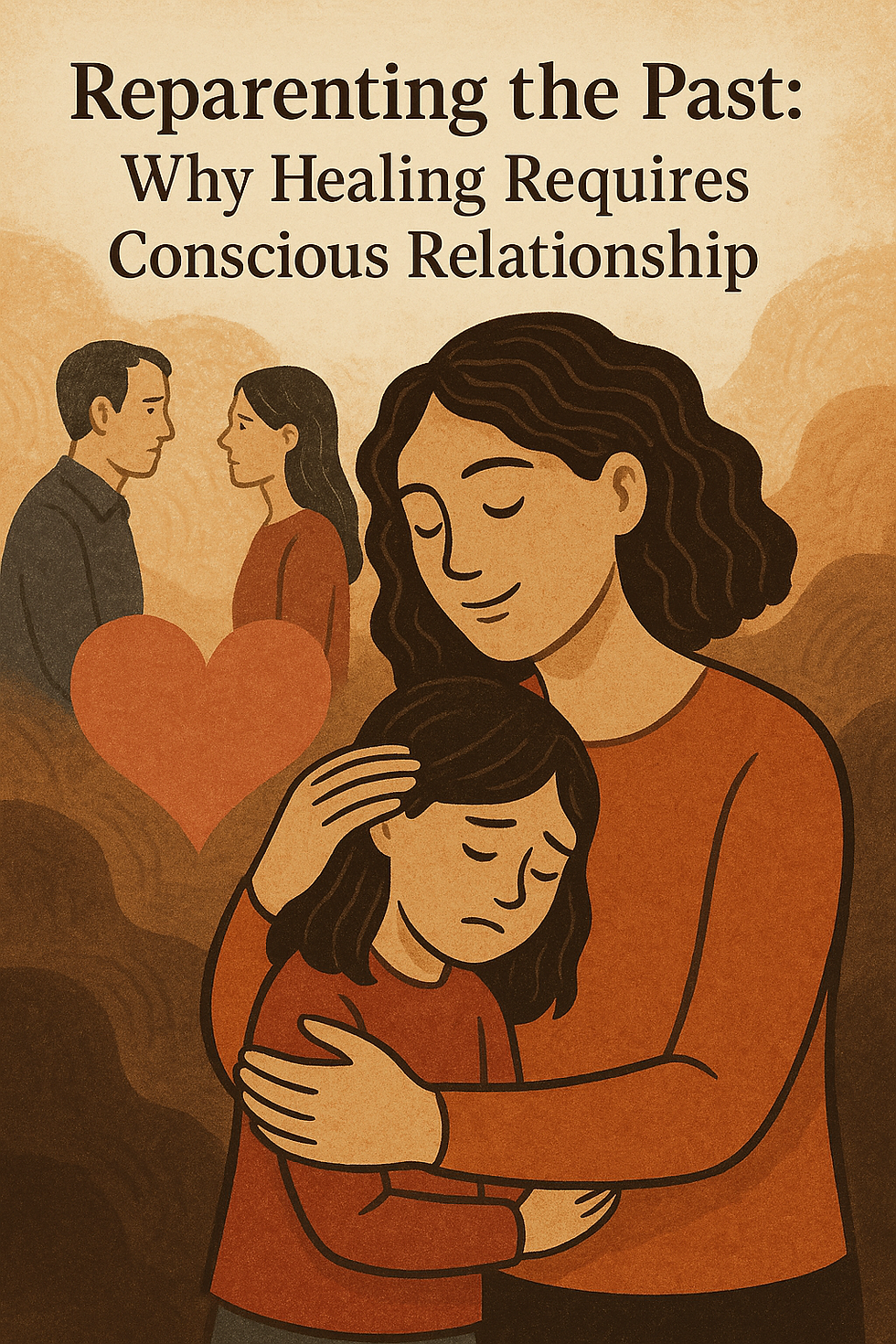
Sometimes what we call a desire is actually a deep developmental or relational need.
And sometimes what we call a need is something the ego has tightened around.
There’s also a developmental layer here.
If, as children:
Our desires were shamed
Our wanting created stress
We grew up in scarcity
We were made to feel “too much”
Then wanting itself may have felt unsafe.
In those cases, desire carries charge.
Not because it’s a survival need in the present —but because it’s linked to early imprinting around shame, scarcity, or burden.
A strong desire can register in the nervous system with urgency and get interpreted as necessity.
Not because it is one.
But because we haven’t yet developed the capacity to differentiate urgency from necessity in our bodies.
This is developmental work.
The Capacity to Feel Disappointment
Something I’ve personally had to learn — and something many of us are building — is the capacity to be disappointed without collapsing.
For many people, disappointment doesn’t feel like:
“Oh, that’s too bad.”
It feels like:
Something essential is being taken away.
I am too much.
I shouldn’t have wanted.
I’m not safe to want.
So we either:
Avoid wanting altogether
Or inflate desires into needs
Because we don’t yet know how to metabolize disappointment.
Learning how to be disappointed — and remain intact — is a developmental milestone.
And equally important:
Learning to hold boundaries and allow others to feel disappointedwithout collapsing, rescuing, or over-explaining.
That’s containment.
The Vulnerability of Desire
There’s another subtle layer.
Sometimes calling something a “need” protects us from vulnerability.
Needs feel justified.Desires feel exposed.
Relationally, there is courage in naming desire without escalating it into necessity.
For example:
“I need more affection.”versus“I really want more affection.”
The second requires more vulnerability and less control.
Questions to Explore in Your Own System
When you’re sorting through something that feels charged, you might ask:
If this isn’t met, does my system destabilize?
Or am I disappointed but still intact?
Is this about safety?
Or is this about aliveness?
Is the charge current — or historical?
Am I protecting myself from vulnerability by labeling this a need?
The work isn’t to categorize perfectly.
It’s to build enough somatic awareness that we can feel what’s underneath the label.
And to increase our capacity to tolerate disappointment without collapsing or self-abandoning.


Comments